
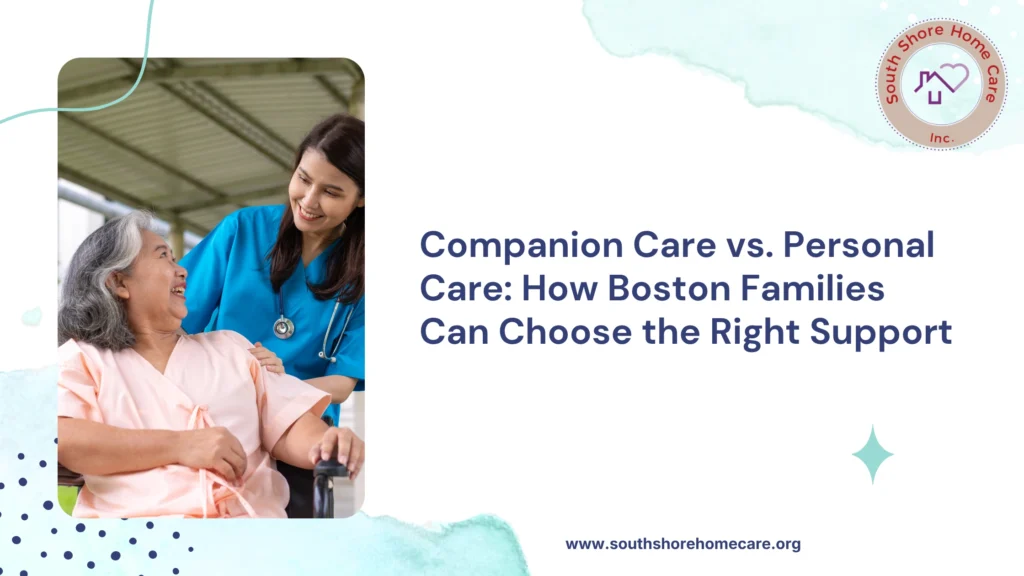
When a loved one begins needing extra help at home, families often discover that home care services come in different forms. Two of the most common options are companion care and personal care. While both support seniors who wish to remain at home, they serve different purposes and address different needs.
Choosing the right type of care can significantly affect a senior’s safety, independence, emotional well-being, and overall quality of life. Understanding what each service includes and when each is appropriate can help Boston families make confident decisions that support long-term aging in place.
This guide explains the differences between companion care and personal care, who benefits most from each service, and how to determine the right level of support for your loved one.
What Is Companion Care?
Companion care focuses on providing social interaction, emotional support, supervision, and assistance with non-medical daily activities. It is often ideal for seniors who remain physically independent but may experience loneliness, isolation, forgetfulness, or difficulty managing certain routine tasks.
Companion caregivers help seniors stay engaged and connected while providing valuable peace of mind to families.
Common companion care services include:
Social Interaction: Meaningful conversations and companionship.
Activity Participation: Games, hobbies, walks, and community outings.
Meal Preparation: Assistance with simple meal planning and preparation.
Transportation Support: Accompaniment to appointments and errands.
Medication Reminders: Helping seniors remember prescribed schedules.
Safety Monitoring: Observing changes in behavior or well-being.
Families can learn more about available Companion Care Services through South Shore Home Care.
What Is Personal Care?
Personal care services provide hands-on assistance with activities of daily living (ADLs). These services are designed for seniors who require physical help due to aging, illness, injury, disability, or reduced mobility.
Personal care caregivers assist with sensitive daily tasks while preserving dignity and independence.
Common personal care services include:
Bathing Assistance: Safe support during personal hygiene routines.
Dressing Assistance: Help selecting and putting on clothing.
Toileting Assistance: Maintaining comfort, safety, and dignity.
Mobility Support: Assistance with walking, transfers, and positioning.
Grooming Services: Hair care, oral hygiene, and personal appearance support.
Continence Care: Assistance managing incontinence-related needs.
Explore available Personal Care Services for seniors throughout the Boston area.
The Key Differences Between Companion Care and Personal Care
Although these services often overlap, understanding their primary differences can simplify decision-making.
| Companion Care | Personal Care |
| Focuses on emotional and social support | Focuses on physical assistance |
| Ideal for independent seniors | Ideal for seniors needing hands-on help |
| Helps reduce loneliness | Helps manage daily living activities |
| Provides supervision and engagement | Provides direct personal assistance |
| Encourages social interaction | Supports physical safety and hygiene |
In many situations, seniors benefit from a combination of both services.
Signs Your Loved One May Need Companion Care
Companion care is often appropriate when a senior remains physically capable but begins experiencing social or lifestyle challenges.
Common signs include:
Increased Isolation: Spending most days alone.
Withdrawal from Activities: Loss of interest in hobbies or social events.
Forgetfulness: Missing appointments or daily routines.
Family Concerns About Loneliness: Limited social interaction.
Difficulty Managing Household Tasks: Challenges with errands or meal preparation.
Early intervention can help prevent emotional decline and improve overall well-being.
Signs Your Loved One May Need Personal Care
Personal care becomes more appropriate when physical limitations affect safety and independence.
Common indicators include:
Difficulty Bathing or Dressing: Daily routines become challenging.
Frequent Falls or Balance Issues: Increased risk of injury.
Declining Mobility: Difficulty walking or transferring safely.
Recent Hospitalization: Temporary support during recovery.
Changes in Personal Hygiene: Noticeable grooming or cleanliness concerns.
Chronic Health Conditions: Conditions affecting strength or physical function.
Recognizing these signs early often prevents accidents and unnecessary hospitalizations.
Can Seniors Benefit From Both Services?
Many families assume they must choose one service or the other. In reality, companion care and personal care often work together to create a more comprehensive support plan.
For example:
Morning Personal Care: Assistance with bathing and dressing.
Daytime Companion Care: Social engagement and activity participation.
Transportation Assistance: Support attending appointments and errands.
Meal Support: Help preparing nutritious meals and encouraging healthy habits.
Combining services allows care plans to evolve alongside changing needs.
Cost Factors for Companion Care and Personal Care in Boston, MA
Costs vary depending on the type and amount of support required.
Factors influencing pricing include:
Hours of Service Needed: Part-time versus full-time care.
Frequency of Visits: Daily, weekly, or occasional schedules.
Level of Assistance Required: Personal care typically involves more hands-on support.
Weekend or Overnight Coverage: Specialized scheduling may affect rates.
Long-Term Care Needs: Extended care plans may differ from short-term arrangements.
A personalized consultation can help families identify the most appropriate and cost-effective solution.
Common Mistakes Families Make When Choosing Care
Choosing the wrong level of support can create unnecessary challenges.
Common mistakes include:
Waiting Until a Crisis Occurs: Preventive planning often produces better outcomes.
Focusing Only on Physical Needs: Emotional well-being is equally important.
Underestimating Care Requirements: Needs often increase gradually.
Ignoring Caregiver Burnout: Family caregivers also require support.
Choosing Based Solely on Cost: Quality and compatibility matter significantly.
Proper planning helps families make more informed decisions.
Real-Life Care Scenarios and Appropriate Solutions
Different situations often require different care approaches.
A senior who lives alone but remains physically independent may benefit primarily from companion care to reduce isolation and encourage engagement.
A person recovering from surgery may require personal care support with bathing, dressing, and mobility.
Someone living with Parkinson’s disease may benefit from both personal assistance and ongoing companionship.
The best solution depends on the individual’s physical, emotional, and social needs.
Best Practices for Choosing the Right Home Care Support
Selecting the right care plan starts with a thorough evaluation of current needs and future goals.
Assess Daily Challenges: Identify tasks that have become difficult.
Evaluate Safety Risks: Consider fall risks and mobility concerns.
Discuss Preferences: Include your loved one in care decisions.
Review Long-Term Needs: Anticipate future support requirements.
Consult Professionals: Home care assessments provide valuable guidance.
Care plans should remain flexible as needs change over time.
How Companion and Personal Care Support Aging in Place
Aging in place remains a top priority for many older adults. Both companion care and personal care help make that goal achievable.
Benefits include:
Maintained Independence: Seniors remain in familiar surroundings.
Improved Safety: Assistance reduces accident risks.
Enhanced Quality of Life: Greater engagement and comfort.
Reduced Family Stress: Caregivers receive valuable support.
Personalized Assistance: Services adapt to individual needs.
Together, these benefits create a stronger foundation for long-term well-being.
Home Care Services in Boston, MA and Local Considerations
Boston presents unique aging-in-place challenges and opportunities.
Local factors include:
Historic Housing: Older homes often require accessibility modifications.
Winter Weather: Snow and ice increase fall risks.
Busy Urban Environment: Transportation and mobility challenges may arise.
Hospital-to-Home Recovery Needs: Many seniors require transitional support after discharge from Boston-area medical centers.
Families throughout Boston, Suffolk County, Norfolk County, Plymouth County, and surrounding communities can review service availability through the Service Areas Page.
For additional caregiving resources, families can explore information provided by the National Institute on Aging:
https://www.nia.nih.gov
Frequently Asked Questions About Companion Care and Personal Care
Families often have questions when comparing home care options. These answers can help clarify which service may be most appropriate.
What is the main difference between companion care and personal care?
Companion care focuses on social interaction, supervision, and emotional support, while personal care involves hands-on assistance with daily living activities such as bathing, dressing, and mobility. Learn more about Companion Care Services and Personal Care Services.
Can a senior receive both companion care and personal care?
Yes. Many seniors benefit from combining both services to address physical, emotional, and social needs. A customized care plan can incorporate support from both care types as needs evolve.
When should families consider companion care services?
Companion care is often appropriate when seniors experience loneliness, social isolation, forgetfulness, or difficulty managing routine household activities. Early companionship support can improve emotional well-being and quality of life.
How do I know if my loved one needs personal care instead of companion care?
If your loved one struggles with bathing, dressing, toileting, mobility, or personal hygiene, personal care services may be more appropriate. A professional home care assessment can help determine the right level of support.
Find the Right Home Care Support for Your Loved One in Boston
Every senior’s needs are unique, which is why choosing the right type of care requires thoughtful consideration. Whether your loved one needs companionship, hands-on assistance, or a combination of both, the right support can improve safety, independence, and overall quality of life.
At South Shore Home Care, we help families navigate care decisions with confidence. Our experienced caregivers provide compassionate companion care, personal care, homemaking assistance, respite care, and additional home care services designed to support aging in place.
South Shore Home Care, Inc.
Address: 1681 Washington Street, Suite 103, Braintree, MA 02184
Phone: (617) 934-168
Email: Info@southshorehomecare.org
Explore additional caregiving resources through our Blog or contact our team today to discuss the best care solution for your loved one.